


Construction network cabling
C3ict is happy to help you if you want to have network cabling (also known as data cabling) installed.. C3ict is a FULL service, which means we pull the cables, terminate them, patch them, deliver them, or simply patch existing cables, and of course resolve problems such as cable breaks, slow connections, etc.
A network cable is a so-called UTP cable; this can be a Cat5e, but certainly also a Cat6 and/or Cat7 network cable. To bridge longer distances, we use fiber optic cable. All of this, of course, in accordance with the CPR standard, or the NEN 8012 standard.
Have cables installed
Pulling network cables can be done in many different ways, and that is without even mentioning the finishing method.
A good quality cable is therefore VERY important. We supply only A-Quality cable. We do not cut corners on this, but the price we charge is so low due to our massive purchasing volume that no other hardware store can match it. Whether it concerns 1 or 2,000 cables: we are happy to come and help you.
Our rates have been among the lowest in the Benelux for over 10 years.
Laying network cabling is the foundation of the network; as soon as the cabling is not properly connected, malfunctions will occur. An annoying malfunction in your network can cause many problems. Have your network connected by our technicians: for over 15 years, we have been doing our best to connect every network correctly at an affordable price. We always provide a clear quotation/offer that fits within your budget by looking creatively at the possibilities.
Whether a small or large project: we ensure proper handling, a fair price, and the right people for the right job. These are just a few of the benefits we at C3 ict have to offer.
We carry out the following activities, among others:
- Connecting the telephone exchange to the UTP network;
- Installation and modification of main and wall distribution panels;
- Finishing of telephony and UTP cables;
- Moving telephones and connections;
- Pulling cross-connection wires on distribution boards;
- Supply of distributors;
- Patch panel setup;
- Mounting patching;
- Numericalization of the layout;
- Telephone exchange installation / relocation;
- Connecting wireless to wired network;
- Complete relocation of ICT infrastructure, PC, server, and telecom environment;
- Network installation / maintenance;
- Backup and server installation;
- Pulling / finishing additional cables;
- ISDN & Analog connections;
- Expansion of your network cabling;
- Installing an entirely new network;
- Measuring the current network cabling;
- Installation of CAT5E, CAT6, CAT7, UTP, FTP, and STP cabling;
- Installation of cable duct facilities;
- Covering material in many shapes and sizes.
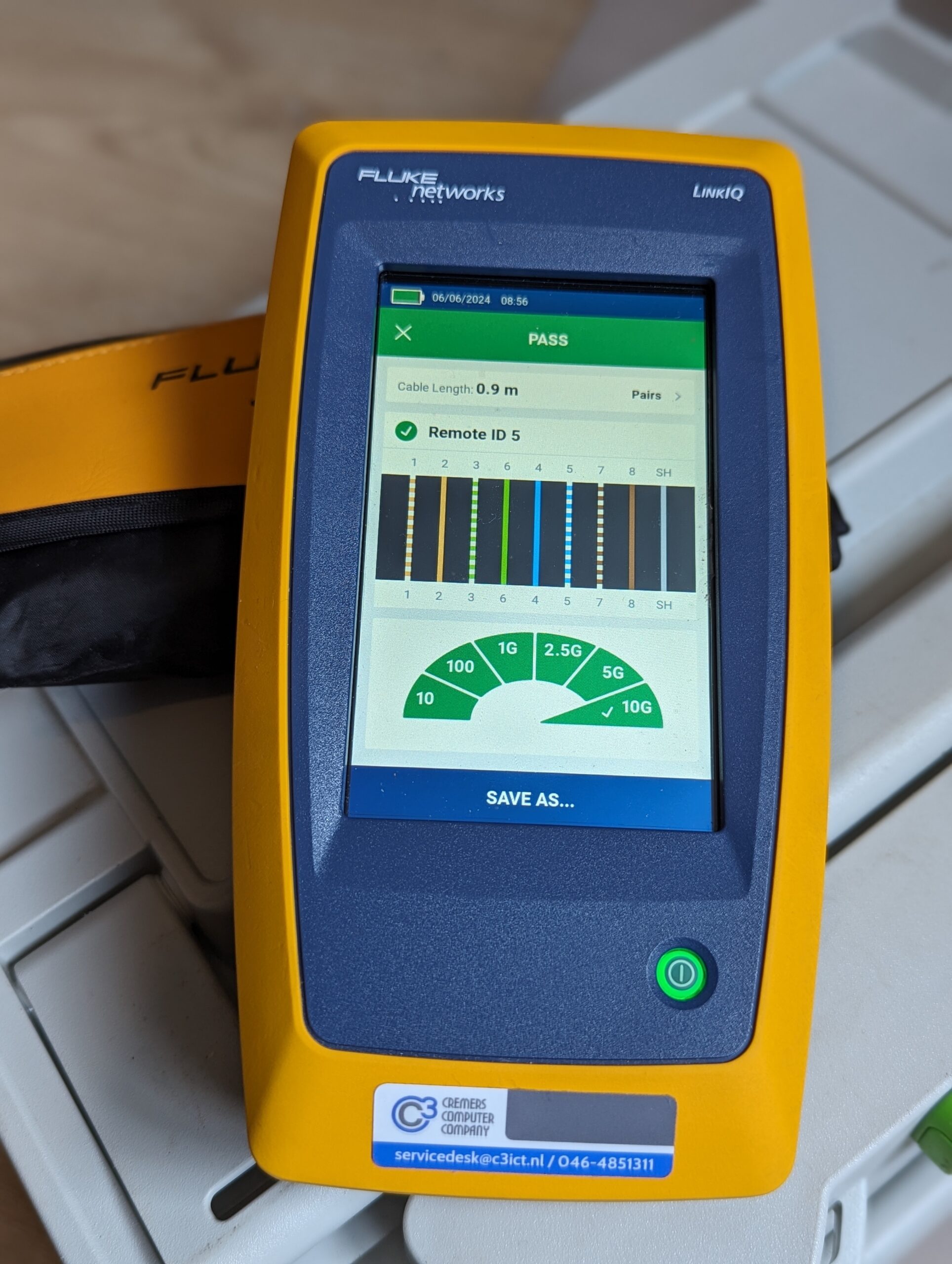
Verification, Qualification, and Certification of Network Cables: The Differences Explained
Verification Verification is checking a network cable to see if it meets basic specifications. This includes testing the cable for length, connectors, and conductivity. Verification is the most basic step in the cable evaluation process and can be performed with simple testing instruments.
Qualification goes a step further than verification and evaluates the performance of a network cable under load. More advanced tests are performed to measure factors such as bandwidth, signal loss, PoE, and interference. Qualified cables meet stricter standards and are suitable for use in critical network applications.
Certification is the highest level of cable rating and guarantees that the cable meets the standards of independent testing laboratories. Certified cables offer the best performance and reliability and are crucial for use in high-performance networks.
In summary:
- Verification: Checks whether the cable meets the basic specifications.
- Qualification: Evaluates the performance of the cable under load.
- Certification: Guarantees that the cable meets the standards of independent test laboratories.
Our references


Cabling not possible?
If it is not possible to run a data cable due to the situation or circumstances, we opt for so-called point-to-point or point-to-multippoint solutions.


You must be logged in to post a comment.